


Industrial Equipment Upgrades Drive Demand for High-Precision and Reliable Couplings
As industrial equipment continues to evolve, industries such as metallurgy, mining, energy, and general machinery are placing higher demands on power transmission components. As a critical component connecting the driving and driven shafts, a coupling plays an important role in torque transmission and the overall performance of mechanical systems.
Higher Performance Requirements for Heavy-Duty Applications
In continuous production and heavy-duty operating environments, couplings must provide reliable torque transmission while accommodating vibration, shock loads, and shaft misalignment within their design limits. Selecting the right coupling requires careful consideration of operating speed, torque requirements, installation conditions, and equipment specifications.
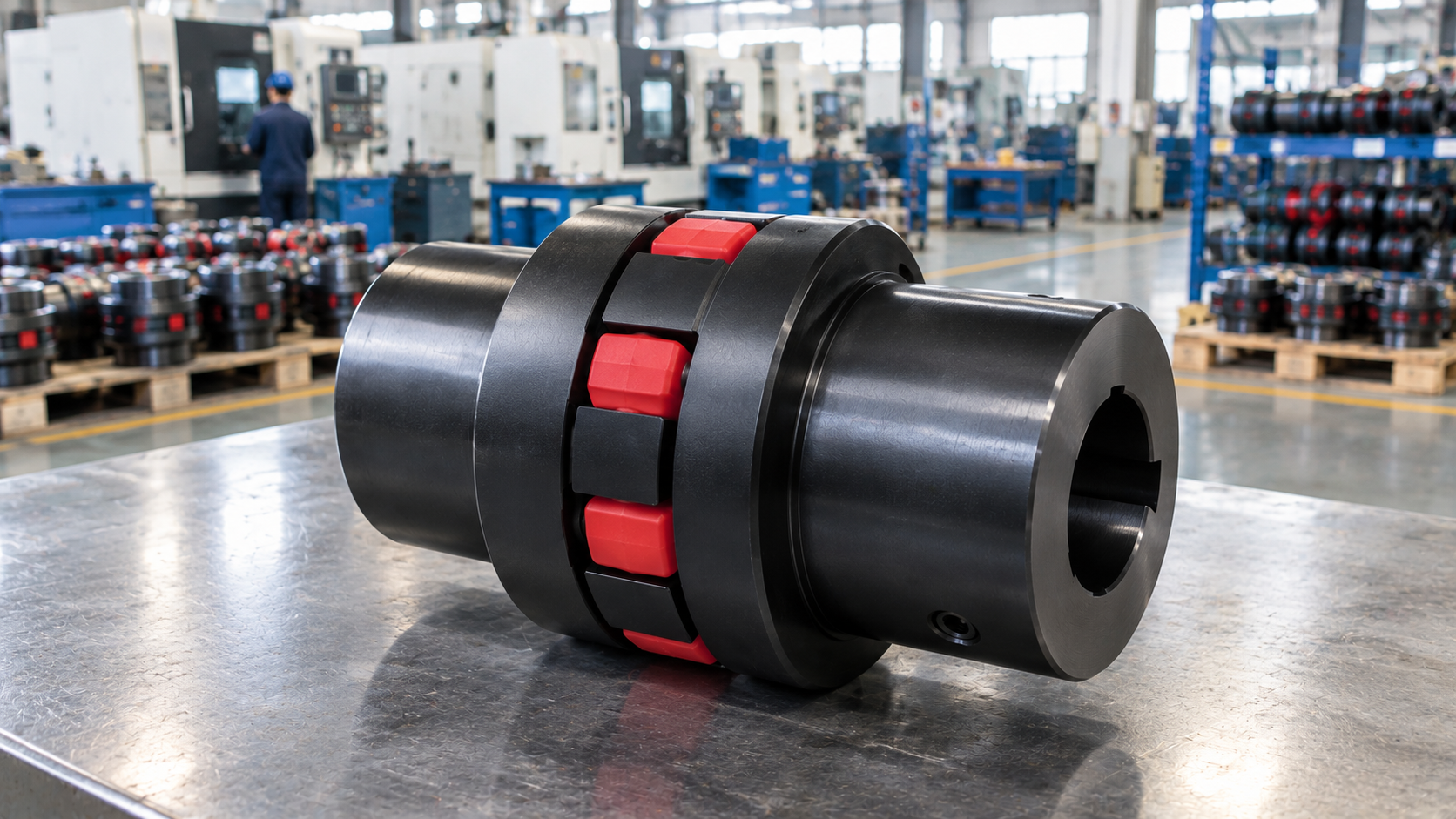
Precision Manufacturing Ensures Product Quality
From raw material selection and forging or casting to CNC machining, heat treatment, and final inspection, every manufacturing stage can affect coupling performance. For couplings used in large industrial machinery, dimensional accuracy, material properties, and fitting precision are particularly important.
Optimized manufacturing processes and comprehensive quality inspections help manufacturers maintain consistent product quality and meet demanding industrial requirements.
Customized Couplings for Diverse Industrial Applications
Different machines have unique requirements for shaft diameters, connection methods, installation space, and operating torque. Standard coupling models may not always meet these specific needs, making customized manufacturing based on technical drawings and equipment parameters an important solution.
As industrial equipment becomes more specialized, couplings that combine precision manufacturing, operational reliability, and customization capabilities will continue to play an essential role in the global power transmission market.